Max Ernst

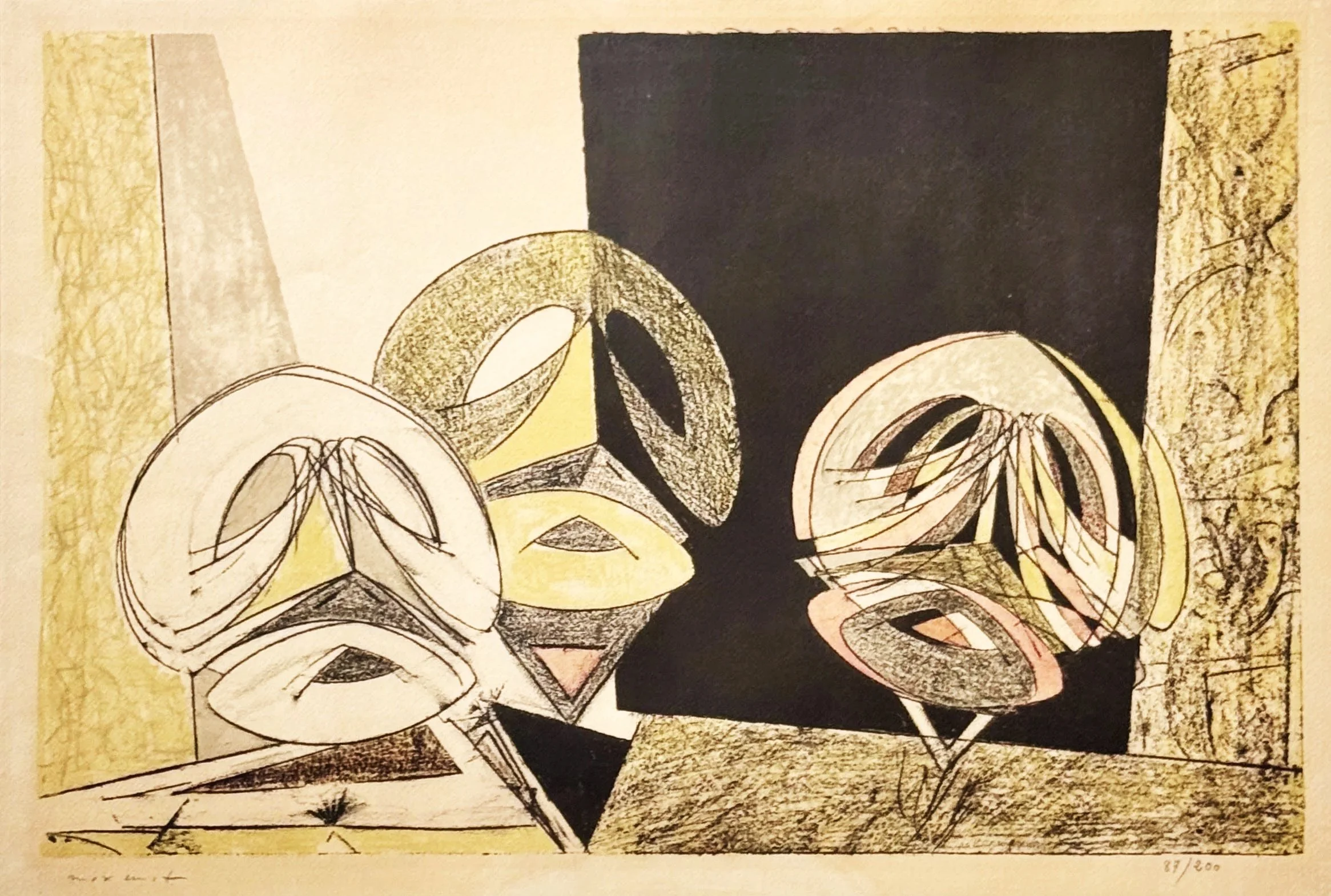
“Masques” - 87/200 35x 52 cm (13.8 x 20.5 in.) Lithograph - signed Private Collection of Kaseowitz Gallery
Max Ernst (1891–1976) was a German-born artist whose work spanned Dada and Surrealism, defined by relentless experimentation and a rejection of convention. Born in Brühl, he studied philosophy at the University of Bonn before turning to art, influenced by psychology, the art of the mentally ill, and early modernism. After serving in World War I, he became a central figure in Cologne Dada and, by the early 1920s, within Surrealism in Paris.
Ernst pioneered techniques such as frottage and grattage and produced influential works including Histoire naturelle (1926) and the collage-novel La Femme 100 têtes (1929). His imagery drew in part on non-Western and Indigenous art, which he collected extensively. During World War II, he fled Europe, later settling in the United States before returning to France in 1953.
Awarded the Grand Prize for painting at the Venice Biennale in 1954, Ernst remains one of the most inventive artists of the twentieth century. His work is held in major museum and private collections worldwide.